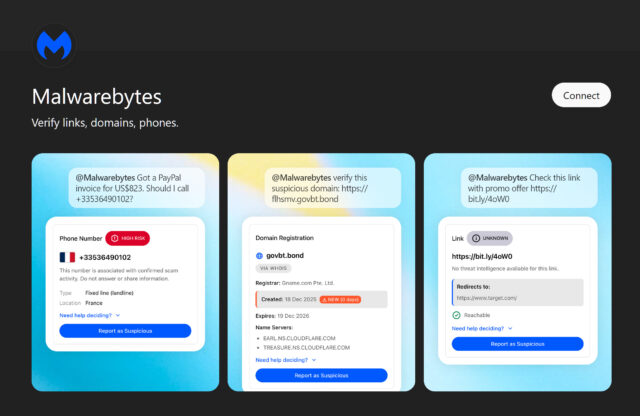
Malwarebytes has added a new feature to ChatGPT that helps users check whether something is a scam. The tool lets people and small businesses assess suspicious links, emails, text messages, and phone numbers using Malwarebytes threat intelligence, directly from within the chat interface.
The new feature is called “Malwarebytes in ChatGPT” and allows users to ask OpenAI’s tool to check content by calling on Malwarebytes’ existing security data. The aim is to provide faster answers when people are unsure whether something they have received is legitimate or a potential scam.
SEE ALSO: 1 in 7 consumers fall victim to online scams
Scams have become increasingly common and costly, especially with the rise of AI. Malwarebytes points to industry research showing global scam losses reaching $442 billion over the past year, a giant leap compared with previous years. Because enforcement is limited, scam operations continue spreading across email, messaging apps, and phone networks.
Rather than asking users to install new tools or search through separate websites, the new feature places scam checks directly inside a product that millions of people already use. Once setup, you can paste in a message, link, or number and receive an assessment that explains potential warning signs and suggests what to do next.
Malwarebytes in ChatGPT
To get started:
- Sign in to ChatGPT
- Go to Apps
- Search for Malwarebytes and press Connect
- From then on, you can “@Malwarebytes” to check if a text message, DM, email, or other content seems malicious.
The feature can review emails, texts, and direct messages for patterns linked to phishing and social engineering. It can also check URLs and domains using Malwarebytes’ threat intelligence, which is continuously updated based on activity seen across millions of protected systems.
Domain checks include basic registration details, which can help identify recently created websites often used in scam campaigns.
Phone numbers can also be reviewed, with warnings shown when numbers appear to originate from unexpected regions.
Another part of the app allows users to submit suspicious content directly to Malwarebytes via ChatGPT. These submissions help strengthen the security firm’s wider detection systems by feeding new information back into its databases.
Marcin Kleczynski, founder and CEO of Malwarebytes, said, “Cybersecurity shouldn’t be confusing or out of reach. By bringing Malwarebytes’ threat expertise directly into ChatGPT, we’re meeting people where they already are and giving them instant, reliable guidance to make safer choices online. The only way we can disrupt the nearly half-a-trillion-dollar scam industry is by being innovative and attacking the problem from every angle.”
Malwarebytes says the results are verified assessments rather than general advice, with explanations that are intended to be easy to understand.
The feature is available to users of ChatGPT Free, Plus, Team, and Enterprise plans.
What do you think about Malwarebytes adding scam checks to ChatGPT? Let us know in the comments.