Fernando Gaspar Barros didn’t set out to build a company culture consultancy. Instead, he wanted to put office workers on stage, giving them direct recognition and motivation for today’s volatile times.
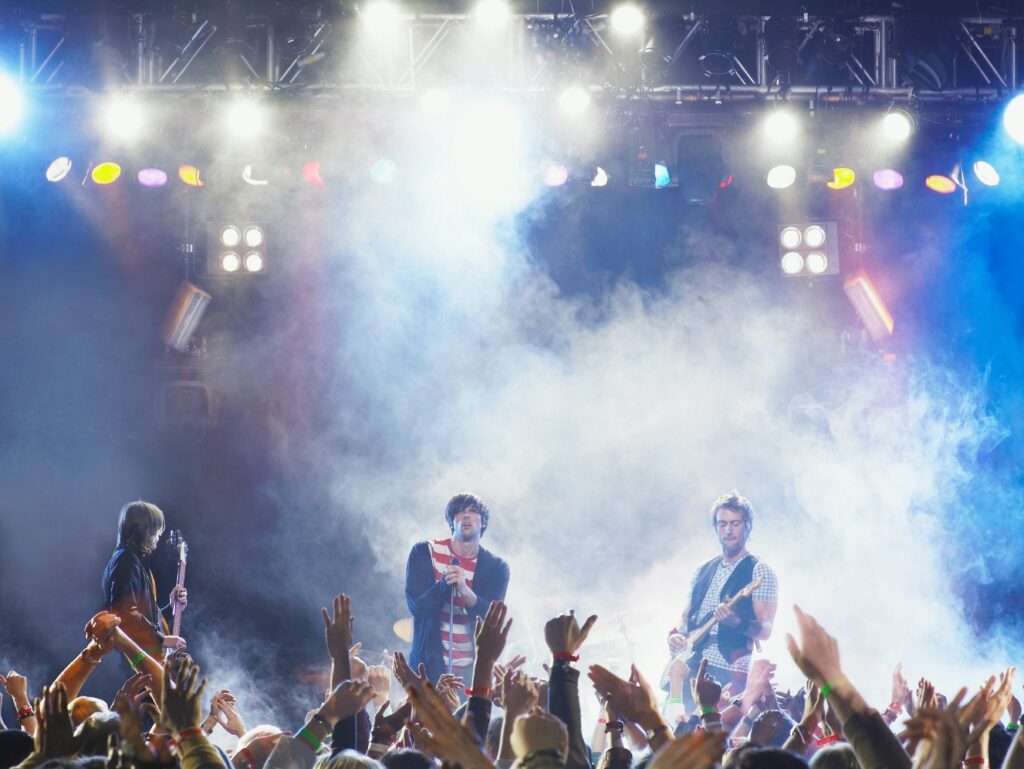
The idea was straightforward, almost absurdly so: what if employees at regular companies formed real bands and performed live? Not just at some awkward holiday party, but at an actual music festival? No lip-syncing, no DJ sets, no forced fun; real instruments, rehearsals, and nerves.
He called it Brands Like Bands, and when he launched in Portugal in 2008, he had no way of knowing it would still be running nearly two decades later, nor that he would partner with the Hard Rock Cafe – or that it would change people’s lives in ways that had nothing to do with quarterly targets.
“Music does something to people that a PowerPoint presentation, one person, will never do: it makes you vulnerable in front of others – and when you go through that together, something changes between all. I imagined what that same effect would manifest itself in offices,” the founder noted while in conversation with Startup Beat.
What he did know, however, was that the most corporate culture initiatives fail for the same reason: they ask nothing of people. A team lunch, a wellness app, a values workshop – these are things that happen to employees, not with them.
Fernando wanted something that required genuine commitment, vulnerability and collaboration – that truly left a mark. And he found his answer in rock music.
Building the Concept
The model Fernando developed is deceptively simple: companies sign up, employees volunteer to form banks, and those bands rehearse over several months before performing live at a shared festival. There are no professionals brought in to make it sound good, because the whole point is that it’s real people, playing real music, in front of their colleagues.
Getting companies through the door was the first challenge. Fernando’s early pitches landed at banks, consulting firms, and other organizations skeptical of anything that looked like it might not belong in a spreadsheet.
“The first question was always what Brands Like Bands had to do with people’s business. And I answered: everything. A band that can’t communicate crumbles onstage, doesn’t create community, engagement, and loyalty; the same happens in companies,” Fernando stressed.
“Some companies told me it was too risky, too unpredictable. I told them that was exactly the goal, to innovate in the approach to companies, their people and their different generations.”
His argument was essentially this: the things that make a great band – including trust, communication, shared purpose, the ability to perform under pressure – are the same that make a great team; and you can’t build those things in a conference room.
It was a compelling enough case. Companies – including BMW, Harley Davidson, Diesel, Lego and Microsoft – signed on, bands formed, and something unexpected started happening: employees who had never spoken beyond a hallway greeting suddenly spent their evenings in rehearsal studios together; people who hadn’t touched an instrument since university were picking them back up.
“It’s a way to meet new people that you probably see in the office and just say ‘Good morning’ to – strangers,” said Diogo Pereira, a consultant who joined his company’s band in the festival’s first year. Rehearsals, he explained, changed all of that.
“It’s not only going to the stage. We need to have some chemistry,” Pereira told Startup Beat.
That chemistry, as it turns out, has a way of spilling beyond the rehearsal room: a keyboard player at one bank and a vocalist at a consulting firm met at a pre-festival dinner Fernando organized – he made a point of bringing participants from different companies together before the show, deliberately dissolving boundaries between organizations – and eventually became life partners.
Their son, born years later, heard his first Brands Like Bands performance in the womb.
Fernando hadn’t designed for any of that specifically, although he had leveraged the conditions that made Diogo and Claudia’s story possible.
Ownership as Strategy
One of the most counterintuitive aspects of how Fernando runs Brands Like Bands is his deliberate refusal to position himself at the center of it. Rather, he frames the festival as belonging to participants, not to him; soliciting feedback, incorporating suggestions, and consistently telling musicians – many of them amateurs who haven’t played in years – that this is their show.
“He’s always saying that this is our show, not his show,” said Claudia Rato, the keyboard player who became one of the festival’s most loyal participants. “I think that’s very beautiful.”
“The moment I make this about me, it all ends. People don’t participate because of someone else’s vision – they participate when the vision is theirs. I’m just the person who creates the differentiation and positioning of these companies that participate,” Fernando stated.
“That’s our purpose: to deliver the best and most authentic version of the companies. What happens in it belongs to them and their people… and not just as employees.”
It’s a stance that might seem like modesty, but is also smart business: communities where members feel genuine ownership grow organically in ways that top-down productions simply do not, as per a Harvard Business Review study.
The results bear that out: the festival has developed its own ecosystem of veterans and alumni, some of whom have been involved since the first edition in 2012 – while others have moved abroad and still fly back to attend.
When the Covid-19 pandemic hit in 2020 and live events became impossible, participants didn’t wait for Fernando to do something; they found their own ways to keep the spirit of Brands Like Bands alive, recording home performances and sharing them across their companies.
Such a self-sustaining strategy is what separates a community from an audience; Fernando built one, not the other.
What Experience Proves
Brands Like Bands has now outlasted some of the companies that participated in it. When one of its founding bands’ employers went into bankruptcy, the band members scattered – but the relationships they’d built through music didn’t dissolve with the org chart.
“We don’t work together anymore, none of us. Still, we have a connection till today,” said Claudia, who was part of that band.
That durability is arguably Fernando’s strongest proof of concept: corporate culture initiatives are notoriously fragile, as they tend to evaporate when budgets tighten, leadership changes, or the consultant who designed them moves on.
What Fernando built is resistant to all of that precisely because it doesn’t live in the company. Rather, it lives in the people that take part.
The festival has also delivered moments that go well beyond the typical return on a culture budget. In 2022, for instance, participating bands performed on a Rock in Rio stage, one of the largest music festivals in the world that gathered over 700,000 fans in the Brazilian city. For most of them musicians involved – amateur players with day jobs in finance and consulting – it was the kind of magic they’d never experienced.
“The majority of Portuguese musicians that live for music dream to play there – and probably they will not,” said Diogo. “And we were amateurs… we lived the dream.”
“I thought I was building a festival, but as it turned out, I was building a place where people could remember who they were outside of their job title. After founding the company initially in 2008, what still surprises me the most is how long its impact lasts; people carry this with them. That’s not something I designed, but something they did themselves,” Fernando further emphasized.
The Broader Lesson
Fernando’s model will not translate directly to every business or culture. But the principles underneath it are more portable than they might appear: the most important of which is real culture requires real stakes – not financial stakes, but personal ones that come from standing in front of an audience, for example.
Most corporate culture spending carefully avoids that kind of exposure, but Brands Like Bands is built entirely around it.
Ownership is also not just a nice sentiment, but rather a design choice. Fernando didn’t accidentally create a community that runs itself – he built the conditions for it, consistently and deliberately by treating participants as co-creators rather than attendees.
“From the beginning, I never wanted people to just show up, watch, and leave; rather, I wanted them to feel that, without them, this wouldn’t exist… because it’s true,” said Fernando.
“Every company that signs up, every person who picks up an instrument after fifteen years, every colleague who shows up to cheer someone on – they’re not just watching Brands Like Bands; they’re building it together and have a feeling of belonging. The moment you understand that distinction, everything about how you manage something changes.”
And third: the best culture investments are those that follow people out the door. Skills, friendship, memories and a sense of identity has nothing to do with an employment contract – these are returns that compound long after an employee’s last day.
Over a decade in, Fernando is still running the festival he started with a simple, slightly unlikely idea: the bands keep forming, the stage filling, and somewhere in Lisbon, a couple who met at his dinner table are teaching their son, Filipe, to play the drums.
“If a band we like comes to Portugal, we go. [Filipe] might not heat every note, but he feels the vibrations of the sound in a gig,” Diogo noted, as Claudia held their son on her lap.
“It’s hard to explain how much Brands Like Bands means to me. I have a deep live for the company, not only because of our story, but also because we love Fernando. We love the way he treats everyone there, the way he makes us feel so comfortable, and also the people we’ve been meeting all these years, from other companies,” concluded Claudia.
What Fernando has achieved, and what he’s set out to do in his startup’s upcoming seven-country tour – including Portugal, Brazil, Italy, Spain and Finland – is indeed not a bad legacy for a rock and roll experiment.
Brands Like Bands’ International Tour 2026 kicked off in March in Porto at the Hard Club. Its next show is scheduled for April 26, 2026 at Bar Manifesto in São Paulo.
Featured image: Fernando Gaspar Barros, courtesy of Brands Like Bands
Disclosure: This article mentions clients of an Espacio portfolio company.