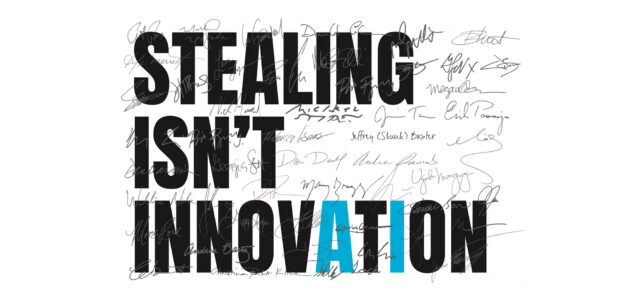
A new “Stealing Isn’t Innovation” campaign has been launched in the United States that challenges how generative AI systems are trained on copyrighted material with neither permission nor payment. The effort from Human Artistry Campaign brings together U.S. creators who argue that current AI development practices are harming creative work, jobs, and long-term economic incentives.
The campaign focuses on the widespread use of copyrighted books, music, films, journalism, and other creative works to train generative AI platforms. The campaign’s organizers say large technology companies have copied vast amounts of content without authorization, shifting the cost of AI development onto creators whose work underpins these systems.
Those backing the campaign say this practice threatens the stability of the U.S. creative economy and that allowing AI developers to train on copyrighted material without compensation weakens incentives to produce original work, especially as AI-generated content increasingly competes with that made by humans.
The campaign also links unlicensed training practices to wider risks in the information ecosystem. Supporters say unchecked use of copyrighted data contributes to the spread of misinformation, deepfakes, and low-quality synthetic content. They warn that over time, AI systems trained largely on AI-generated material could degrade in quality as original human-created work becomes harder to sustain.
Stealing Isn’t Innovation
The campaign does not call for new copyright laws, but instead wants enforcement of existing legal protections that already govern how creative works can be used. The organizers point to models used previously, where copyrighted works could be used under defined terms while ensuring creators were paid. This would also give creators the right to opt out of AI training entirely.
Dr. Moiya McTier, senior advisor to the Human Artistry Campaign, said, “Real innovation comes from the human motivation to change our lives. It moves opportunity forward while driving economic growth and creating jobs. But AI companies are endangering artists’ careers while exploiting their practiced craft, using human art and other creative works without authorization to amass billions in corporate earnings. Stealing someone’s work isn’t innovation, it’s theft. America wins when technology companies and creators collaborate to make the highest quality consumer and enterprise digital products and tools. Solutions like licensing offer a path to a mutually beneficial outcome for all.”
The campaign is now being rolled out publicly. “Today, creators from various disciplines across the country posted a custom ‘Stealing Isn’t Innovation’ banner on socials, and major news outlets deployed full-page ads sharing the same message. The ‘static’ represents our future if we continue permitting AI developers to behave this way: bland and devoid of human creativity,” McTier said.
The campaign challenges claims from AI developers that licensing copyrighted material is impractical and points to existing licensing agreements already in place between content owners and AI companies as evidence that legal access to training data is achievable when companies choose to pursue it.
The Human Artistry Campaign operates across more than 30 countries and includes hundreds of organizations representing journalists, musicians, actors, writers, photographers, publishers, and other creative professionals.
You can find out more about the “Stealing Isn’t Innovation” campaign here.
What do you think about creators pushing back against how generative AI systems are trained? Let us know in the comments.