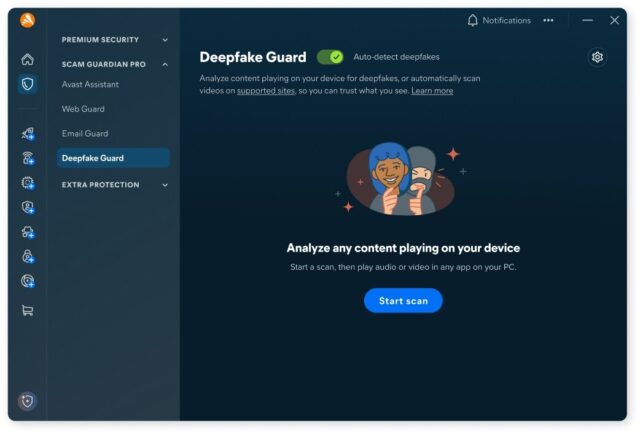
Avast has expanded its scam protection tools with the launch of Deepfake Guard on Windows, and the wider international availability of Avast Scam Guardian on mobile devices. The updates focus on detecting scam content embedded in everyday video, calls, texts, and messages, as deepfake-based fraud becomes harder to spot during normal online activity.
Scam activity involving manipulated media has increased sharply as video becomes a common source of information and decision making. Gen Threat Labs reported more than 159,000 unique deepfake scams detected during late 2025 across devices where video scam detection was active. Many of these scams appeared during normal video viewing rather than through downloads or suspicious links.
SEE ALSO: AI as a target, web-based attacks and deepfakes — cybersecurity predictions for 2026
The new Deepfake Guard feature analyzes audio in videos as people watch them, scanning for signs of manipulation linked to scams. It runs directly on Windows systems and across popular video platforms including YouTube, TikTok, Facebook, and X.
Deepfake Guard is listening
Deepfake Guard focuses on audio rather than visuals, as scammers increasingly rely on cloned voices to impersonate trusted people. By monitoring speech patterns and contextual cues, it attempts to warn users when a video contains content associated with deception.
The analysis happens locally on the device, which reduces reliance on cloud processing and limits data exposure.
Alongside the PC rollout, Avast Scam Guardian and Scam Guardian Pro are now available internationally on mobile devices. These monitor calls, texts, and emails for scam indicators, extending coverage beyond desktop environments.
YouTube accounted for the largest share of blocked deepfake scam videos on PCs, followed by Facebook and X. These videos often blended into standard feeds, which made them difficult to distinguish from legitimate content without automated analysis.
“Deepfakes are a serious threat, but they’re a symptom of a larger problem: deception,” said Leena Elias, chief product officer at Gen, which owns Avast. “AI-generated content on its own isn’t inherently harmful. The risk comes when scammers use it to create urgency, apply pressure, and take advantage of trust. That’s what Avast Deepfake Guard is built for: helping people understand when something may be manipulated and make safer decisions in the moment. By expanding Avast Scam Guardian globally on mobile, we’re empowering people worldwide to identify and avoid scam calls, texts and emails with confidence.”
Deepfake Guard is included with Avast Premium Security and currently supports English language video analysis. Supported platforms include Facebook, DailyMotion, Instagram, TikTok, Twitch, Vimeo, X, and YouTube.
What do you think about deepfake detection tools becoming part of everyday security software? Let us know in the comments.